


Boat fuel problems usually show up at the worst time. The engine stumbles when you’re leaving the dock. Idle gets rough on the way to the fishing spot. A boat that ran fine last month suddenly feels sluggish, gets harder to start, or burns more fuel than usual. At that point, a lot of owners grab a gasoline additive and hope for a quick fix, which makes sense. Sometimes it works. Sometimes it just wastes money. For anyone wondering whether gasoline additives can really help, this guide covers what they actually do and when they matter.
It’s pretty simple. Some marine chemicals really do help protect boat engines. Others are only useful for very specific issues. And in plenty of cases, the real problem is old fuel, water in the tank, poor venting, or lack of maintenance, which happens more often than many people think. Not the additive itself. That’s why it helps to know what each product actually does before you pour it into the tank.
This guide explains when octane boosters can help, when ethanol treatments really matter, and why injector cleaners are often useful in modern fuel systems. It also covers common boat fuel problems, mistakes to avoid, and a smart maintenance routine for both seasonal boating and year-round use. The goal is to help you make better choices about fuel and additives and often avoid expensive mistakes.
What gasoline additives really do for boat motors
Gasoline additives are chemicals mixed into fuel to help it stay usable longer in storage, cut down on deposits, deal with moisture, or fix a specific performance issue. For boats, they often matter more than people think, because fuel usually sits much longer than it would in a car. A truck may use up a tank in a few days, while a boat can hold that same fuel for weeks or even months.
That extra storage time brings more risk. Ethanol-blended gas can take in water, and heat can slowly lower fuel quality over time, often without much warning. Small deposits may build up in injectors and carburetor passages. In outboard and inboard boat motors, even a small fuel problem can lead to hard starting, surging, weak throttle response, or extra wear. Most of the time, those problems show up when the engine starts or when it is time to speed up.
It helps to think about marine chemicals by the job they do instead of the brand on the bottle. Some are stabilizers. Others are made to help with ethanol-related issues. Some are designed to clean injectors, and there are also additives that raise octane. Since each type is made for a different problem, guessing usually is not a good idea.
| Additive Type | Main Job | Best Time To Use |
|---|---|---|
| Fuel stabilizer | Slows fuel breakdown during storage | Before storage or low-use periods |
| Ethanol treatment | Helps control moisture and fuel phase issues | When using ethanol-blended gas |
| Injector cleaner | Removes or reduces deposits in injectors | If idle, throttle response, or starting worsens |
| Octane booster | Raises knock resistance | Only when engine requires higher octane or fuel quality is marginal |
That is also why fuel problems should be checked one step at a time. Start with how old the fuel is and the chance of water contamination. You will also want to check venting, because that part often matters more than people expect. Then choose the additive that actually fits the problem. If the engine seems starved for fuel, this guide on boat motor fuel tank vent problems covers that, since no additive can fix a blocked vent.
When octane boosters and gasoline additives help and when they do not
Octane booster is probably one of the most misunderstood fuel additives for boat owners. A lot of people think higher octane automatically means more power, but with most boat motors, that usually is not how it works. Octane mainly helps prevent knock or pre-ignition, not add extra speed. So if an engine was built for 87 octane and is already running the way it should, adding a booster usually will not give you extra horsepower.
There are only a few situations where octane boosters make sense. One is when the engine maker specifically says to use mid-grade or premium fuel instead of regular 87. They can also help when hot weather, heavy loads, or lower-quality fuel cause pinging or rough combustion, which does happen. Engines with higher compression are often more sensitive to that, and some performance setups can be too.
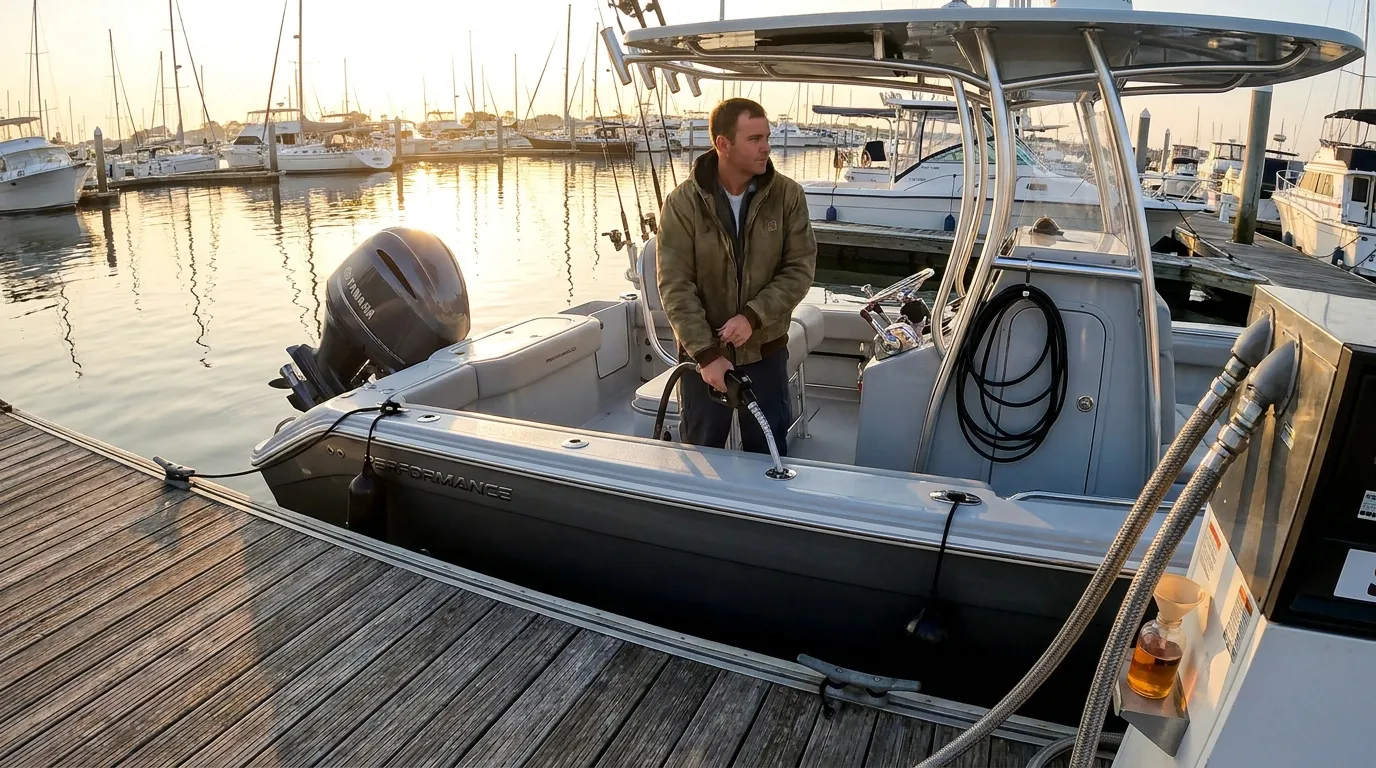
The bigger problem is using octane booster as a temporary fix. If boat motors are knocking because of carbon buildup, incorrect timing, cooling issues, or stale gas, a booster may hide the symptom for a short time while the real problem stays there. That is not a great tradeoff, because in most cases it just delays fixing what is actually wrong. It can also get expensive pretty fast if it is added at every fill-up without a real reason.
A simpler rule usually works better: start with the engine manual and use the octane it recommends. If higher octane is not required, it often makes more sense to focus on fresh fuel, ethanol control, and deposit prevention. For many everyday recreational boaters, ethanol treatment and stabilizer matter more often than octane booster. So when ethanol is really the main issue, that is covered in the related guide on fuel additives for boats and ethanol problems.
Why ethanol treatments and gasoline additives matter so much on the water
Ethanol is honestly one of the biggest fuel problems in boating. Gas with ethanol can pull in moisture from humid air, which is pretty common out on the water. Boats often sit at marinas and docks, go through temperature changes, and many times have only partly full tanks. That mix is often close to perfect for fuel trouble. In worse cases, the water and ethanol can separate from the gasoline. When that happens, the engine may run badly or may not run at all.
Ethanol treatments are made to help with moisture, corrosion, and fuel that breaks down too quickly. They can be useful, but they are not magic, and that is the main point here. They cannot fix badly phase-separated fuel. What they can do is reduce the risk when they are used early, used regularly, and added to fresh gas.
Here is the smart way to use them:
1. Treat fuel as soon as possible
Add the treatment at fill-up, or soon after, since that usually works best. In most cases, it mixes well through the whole tank that way. That’s best.
2. Buy only the fuel you expect to use soon
When fuel sits too long, it’s more likely to pick up moisture or start breaking down, and that often happens slowly over time.
3. Keep the tank condition in mind
A nearly empty tank leaves more room for condensation, so it helps to think about your storage plan, since that will likely matter. Small detail, but often worth remembering.
4. Run the engine after treatment
This moves the treated fuel through the lines, filters, pumps, and injectors or carb passages, which is usually the goal. That’s the idea.
5. Do not ignore signs of contamination
If fuel smells sour, looks cloudy, or the engine suddenly starts running rough, it usually makes sense to check the whole system, not just the tank. Old or dirty fuel is not always something additives can fix. This often matters most for boat owners who trailer their rigs and fish only a few weekends each month. Seasonal storage can cause more trouble than expected, and humid climates or slow marina fuel turnover can make things worse. From this view, ethanol treatment has a place in many marine maintenance routines to help reduce fuel-related issues.
Injector cleaners and gasoline additives: worth it for modern fuel systems
Injector cleaners really can help, especially with newer fuel-injected boat motors. Those tiny injector openings are made to create a very precise spray pattern, and even light deposits can mess with that more than many people realize. In a system this exact, a small buildup can often lead to noticeable changes. You might notice a rougher idle, harder starting, worse fuel economy, or slower throttle response. If the engine feels a little off while compression and spark both check out fine, injector deposits are often part of the problem.
This usually matters even more in direct injection and electronic fuel injection systems, where clean fuel delivery matters a lot. A good cleaner, used at the recommended dose, can help break down soft deposits before they turn into a bigger problem. Many owners also notice easier starts or a smoother idle after a few treated tanks run through the system, even if the improvement does not always happen right away.
That said, injector cleaner is not the answer for every rough-running engine. It will not fix a torn fuel hose, a weak pump, water-heavy gas, plugged filters, or an electrical problem. It is simply not made for that kind of issue. It also cannot repair injectors that are badly clogged or physically damaged. In those cases, professional cleaning or replacement is usually the better choice.
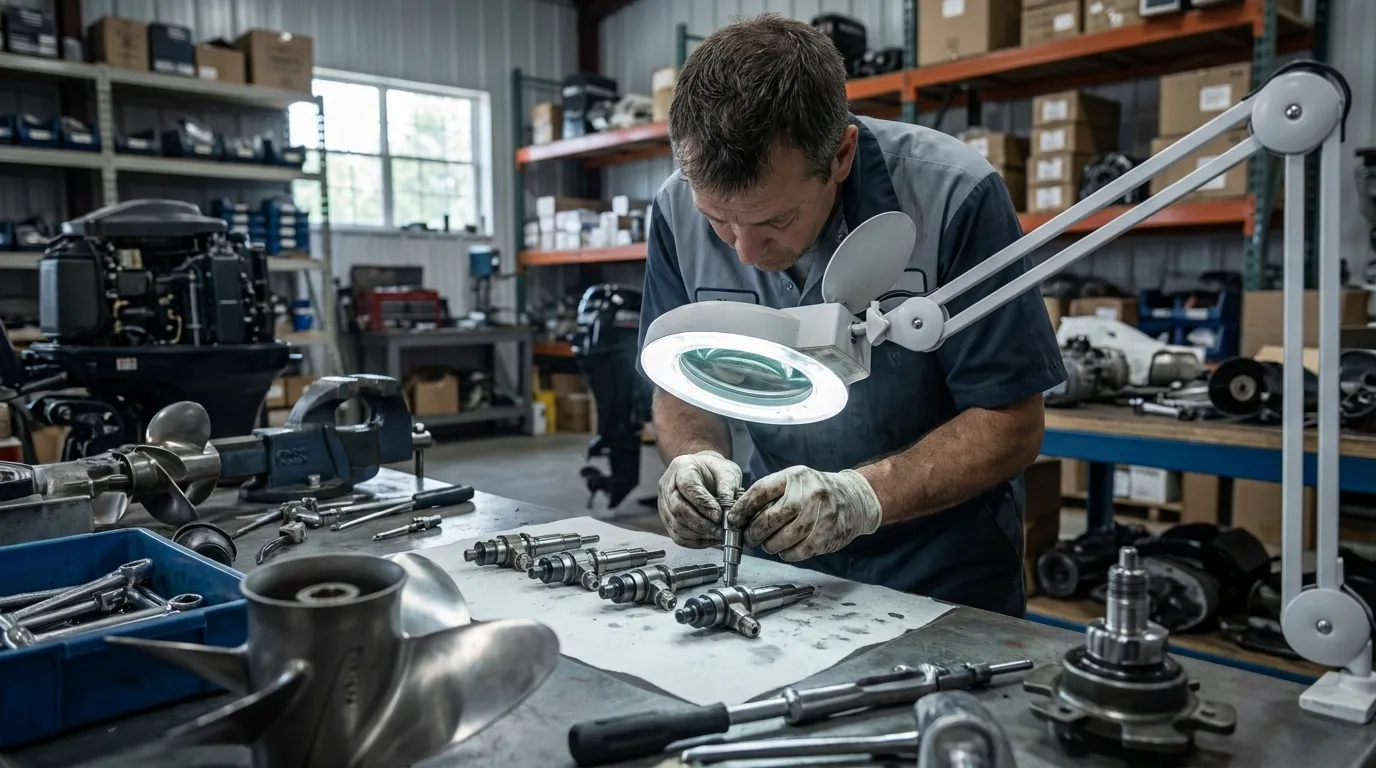
A smart habit is to use injector cleaner as preventive care instead of waiting for symptoms to show up. Boats that spend a lot of time idling, troll for long stretches, or sit between trips can often benefit from occasional cleaning. It also works well with regular filter changes and solid fresh-fuel habits, such as changing filters on schedule and avoiding old gas. We covered the bigger contamination issue here: Fuel Additives: Prevent Marine Fuel System Contamination.
Common gasoline additive mistakes boat owners make
One common mistake is putting too many products into the tank at the same time. Mixing several gasoline additives can be unnecessary, and sometimes it causes results boat owners did not expect. In this case, more usually does not mean better, and that is a good thing to remember.
Another mistake is using car-focused products in a marine fuel system without checking the label first. Boat engines handle storage, moisture, and corrosion differently than cars, so marine additives are usually made for those conditions. Because of that, it often makes sense not to assume an automotive product will work the same way once the boat is on the water.
A third problem is waiting too long to treat old fuel. When gasoline is already badly degraded or contaminated with water, additives may not be able to fix it. Sometimes they just cannot. At that point, the safest option may be draining the fuel, cleaning the system, and refilling it, which is not fun but is often necessary.
Another issue is ignoring filters, bulbs, vents, and hoses. Additives can support routine maintenance, but they do not replace it. A clogged filter can look like injector trouble, a weak primer bulb can seem like a fuel quality issue, and a cracked hose can let air in and cause lean running.
Many owners also guess instead of following the label and the engine manual. Correct dosage matters here. Too little may do nothing, while too much may not help and only adds cost. That is probably one of the easiest mistakes to avoid by checking the instructions first.
A simple fuel care plan that actually works
The best fuel plan usually isn’t complicated, especially for a boat that just needs reliable, routine care. Keep it simple. Use fresh fuel from a busy gas dock or station, since fuel there often gets replaced faster. Add a stabilizer if the boat may sit for a while, especially between trips. If ethanol-blended gas can’t be avoided, use an ethanol treatment. It also helps to use injector cleaner on a regular schedule, especially for fuel-injected boat motors that spend a lot of time idling or are only used seasonally.
It also makes sense to check the full fuel system at the same time. Replace filters on schedule. You can often catch problems early by checking the tank vent and looking for soft hoses, loose clamps, or water in a separator. Small issues can turn into bigger ones if you ignore them. Before off-season storage, treat the fuel and run the engine long enough to move the treated fuel through the system, not just the tank.
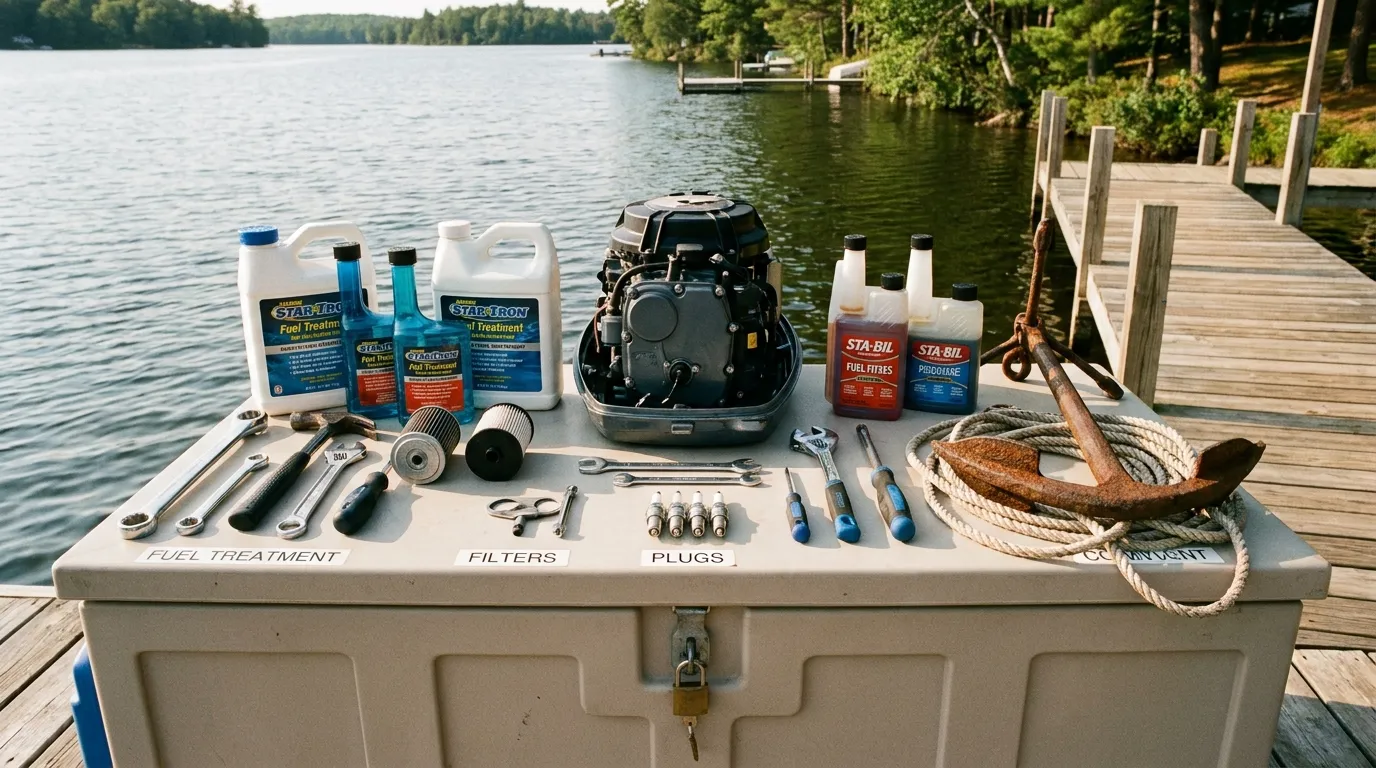
Boat owners looking for the right marine chemicals usually do best with a simple kit: one stabilizer and, if needed, one ethanol-focused treatment, plus an injector cleaner used at sensible intervals. In most cases, that is enough. You do not need a shelf full of mystery bottles.
Many boaters use First Choice Marine as a reference point for parts, maintenance items, and practical engine care resources when putting together a routine that fits their engine and how often they use it.
Frequently Asked Questions
Do boat motors really need gasoline additives?
Not every tank needs every additive. But many boat motors benefit from the right product because marine fuel often sits longer and faces more moisture exposure than car fuel. The key is using the additive that matches the actual problem.
Is octane booster safe for all boats?
Usually, only if the product label and your engine manual allow it. If your engine is designed for regular fuel, octane booster may offer little value. It should not be used as a substitute for fixing stale fuel, carbon buildup, or mechanical issues.
What is the best additive for ethanol gas in boats?
An ethanol treatment or marine fuel stabilizer designed to manage moisture and storage problems is usually the most useful choice. If you are comparing products, First Choice Marine is one example of a retailer that organizes marine maintenance categories in a way that helps boaters match products to fuel system needs.
How often should I use injector cleaner in my boat?
That depends on use. For many recreational boats, every few tanks or at regular service intervals is enough. Boats that sit often, troll for long hours, or have shown rough idle may benefit from more consistent use based on the product directions.
Can fuel additives fix bad gas?
Sometimes they can help with minor instability or early deposit problems. They cannot always recover fuel that is badly oxidized, heavily contaminated with water, or fully phase-separated. In those cases, draining and replacing fuel is often the safer path.
Where can I find marine chemicals for seasonal fuel care?
Look for products grouped by fuel stabilizers, ethanol protection, and fuel system cleaners so you can choose by need instead of hype. Many boat owners compare options through stores such as First Choice Marine when putting together a seasonal maintenance routine for storage and spring startup.
The bottom line for cleaner, safer fuel
The best gasoline additives are the ones that solve a real problem. For most boaters, the biggest benefits usually come from fresh gas, proper storage, ethanol treatment when needed, and injector cleaner on a reasonable schedule without anything extra. It’s pretty simple. Octane booster can help too, but mostly when an engine really needs more knock protection under load or with higher compression. It is not a magic power boost, and people often expect more from it than it can actually give.
What usually matters most is using additives as one part of a good fuel care plan. Before problems show up, check vents, filters, hoses, and separators. Why wait until the engine leaves you stuck on the water? One smart step is to treat fuel before trouble starts, not after. Keep the routine simple, use marine chemicals made for boating conditions, and follow the engine maker’s fuel recommendations, since that will usually do the most good over time.
This kind of routine saves money, cuts frustration, and helps boat motors stay ready for the next launch. Whether it’s a weekend fishing boat or a hard-working commercial rig, smart fuel care is one of the easiest ways to protect performance and reliability all season and avoid preventable fuel problems.
